<!DOCTYPE html>
Why Variable Speed AC Units are Worth the Investment for Phoenix Homes
Why Variable Speed AC Units are Worth the Investment for Phoenix Homes
Phoenix summers push air conditioners harder than almost anywhere in the country. From Arcadia to Desert Ridge and across zip codes like 85018, 85032, and 85050, the outdoor temperature often stretches past 110°F. Homes near Camelback Mountain see long run cycles from noon into late night. In this climate, a variable speed AC system is not a luxury. It is a smart engineering match for the Valley of the Sun.
Day & Night Air Conditioning, Heating, & Plumbing sees the trade-offs up close on service calls. Many central air conditioners in Phoenix are single-stage units installed on rooftops or as split systems with the condenser at the side yard. These systems slam on at full capacity, then shut off. The result is temperature swings, frequent short cycling, and high energy bills. Variable speed equipment, built on inverter-driven compressors and ECM blower motors, solves these problems by matching output to the heat load minute by minute.
For homeowners searching AC repair Phoenix or emergency air conditioning repair near me, comfort is urgent. The right system choice can also reduce strain on the grid and lower monthly utility costs through the peak of July and August. This article explains how variable speed technology performs in the Phoenix, AZ desert environment, what to expect during installation, and how to judge payback on real homes in Ahwatukee Foothills, Biltmore, Paradise Valley Village, and beyond.
What “Variable Speed” Really Means in Phoenix Heat
A variable speed air conditioner uses an inverter-driven compressor that adjusts its RPM across a wide range. Rather than a binary on or off, it ramps capacity up during the hottest hours and down during evenings or mild mornings. Inside, an ECM blower motor modulates airflow to keep coil temperature and duct static pressure within target ranges. This approach stabilizes supply air temperature and lifts seasonal efficiency compared with single-stage and two-stage units.
On a 115°F afternoon near Chase Field or the Footprint Center, heat gain from sun-exposed stucco, tile roofs, and west-facing windows is intense. A variable speed system ramps toward full output to track the climbing sensible load. After sunset in Sunnyslope or North Mountain, as concrete and block walls release stored heat, the system holds a mid-capacity level and avoids the on-off cycling that wastes energy and wears components.
In Phoenix, latent load from humidity is lower than in coastal cities, but monsoon bursts can drive dew points high enough to cause sticky rooms. A variable speed blower can slow airflow over the evaporator coil, drop coil temperature, and pull more moisture without overcooling the space. That keeps indoor conditions steady in Arcadia bungalows and Maryvale ranch homes during storm days.
Why Variable Speed Cuts Bills in the Valley of the Sun
Energy savings come from long, low-power runs. Single-stage systems use high inrush current every start. They overshoot thermostat targets, then coast until the house warms again. That cycle burns electricity and causes temperature swings. A variable speed unit avoids many high-amp starts by modulating instead of restarting, and it holds a tight temperature band.
At partial load, compressor RPM drops, condenser fan slows, and the ECM blower finds the best CFM for heat transfer. Field measurements in Phoenix homes show that part-load operation dominates most hours, even on hot days. The system spends significant time below peak output. That is where variable speed shines. On utility bills, many homeowners near Papago Park and the Arizona State Capitol see 20 to 35 percent cooling energy reduction after a correct installation with proper ductwork tuning. The range depends on house size, attic insulation, window film or shading, and duct leakage.
Efficiency labels help set expectations. Modern variable speed systems often carry higher SEER2 ratings than single-stage models. In the Phoenix climate, part-load EER2 performance and sensible capacity tracking matter as much as the headline SEER2 figure. The benefit shows up during real afternoons, not only in a test lab. A unit that avoids short cycling at 4 p.m. In Paradise Valley does more than save kilowatts. It keeps rooms usable.
Comfort Gains Homeowners Feel Right Away
Comfort in Phoenix is about steady supply air, even room temperatures, and manageable humidity during monsoon surges. Variable speed blows air continuously at a low level, then increases airflow only as needed. That soft, stable operation reduces hot spots in second floors and rooms with large windows. Bedrooms in Desert Ridge and South Mountain neighborhoods stay within a narrow band without the start-stop blasts that wake light sleepers.
Continuous filtration is another benefit. When the ECM blower runs at low speed, air passes through MERV filters more often. Dust and pollen common in Maricopa County get captured without the pressure drop that chokes older systems. With the right MERV rating and duct static target, a homeowner sees cleaner return grilles and less dust on surfaces. For many households, that quality-of-life change equals the value of the energy savings.
Installation Matters: Ducts, Sizing, and Rooftop Package Units
Phoenix housing stock includes split systems and a large number of rooftop units on single-story homes. Many rooftops use package units feeding down into a plenum with branches that snake across the attic. Others run a split system with an outdoor condenser at grade and an air handler in the garage or attic. Variable speed can work with either layout, but the setup needs attention to airflow and pressure.
Correct sizing follows Manual J for heat load and Manual S for equipment selection. In this climate, oversizing causes short cycling even with an inverter because the minimum capacity can still be too high. A system that idles at 40 percent of a too-large size may short cycle at night in Ahwatukee Foothills. Right-sizing keeps the compressor in a sweet spot and lets the ECM blower run steady.
Ducts require a Manual D review. Many Phoenix homes have high static due to long flex runs, tight turns, and undersized returns. That starves the evaporator coil and raises system noise. A variable speed unit can adapt to pressure within limits, but it cannot fix a 0.9-in. W.c. Return path on its own. Day & Night technicians measure total external static, check supply and return temperatures, and adjust tap settings or recommend return upgrades where needed.
Rooftop package units also benefit from inverter compressors. A modern package unit can modulate to match daytime heat while shading the roof penetration with a cleaner, gasketed curb. On older rooftops near Paradise Valley Village or Sunnyslope, technicians often find dried mastic, heat-cracked insulation, and leaky boots. Sealing and reinsulating during a new variable speed install preserves the efficiency gain.
Technical Deep Dive: Components That Make Variable Speed Work
The compressor is the heart. Inverter boards adjust frequency to control RPM. That output pairs with a thermal expansion valve, often a TXV, which meters refrigerant to the evaporator coil across a broad operating range. The blower motor is an ECM, capable of holding target CFM despite filter loading or mild static shifts. Contactors and relay switches sit under lighter stress because start events are fewer. Start capacitors still play a role, and a hard start kit can help on rooftop units exposed to afternoon heat.
Refrigerant in most Phoenix systems is R-410A. A system with a correct charge holds stable superheat and subcooling at both full and part load. Day & Night technicians check these numbers during commissioning and service. If a homeowner sees ice on copper refrigerant lines or the evaporator coil freezes, that points to airflow restriction or low charge from a refrigerant leak. Either way, a variable speed compressor cannot compensate for a major deficiency. It needs clean airflow and a sealed circuit to deliver the benefits.
Controls tie it together. A communicating thermostat provides finer steps for both the compressor and the indoor fan. Phoenix homes with zoning dampers get smoother handoffs between zones, which is a common fix for large Arcadia houses with wings and additions. Surge protection at the condenser and clean power to the air handler protect inverter boards during monsoon lightning.
Repair Reality: What Breaks in Phoenix and How Variable Speed Handles It
Heat takes a toll on electronics and capacitors. Service trucks in Phoenix carry heavy-duty start capacitors and universal contactors because many failures trace back to high attic and rooftop temperatures. Day & Night’s AC repair Phoenix team keeps these parts on board to finish a repair on the first visit. That speed matters when indoor temperatures climb fast.
Common calls include short cycling, AC blowing warm air, squealing fan motors, thermostat misreads, and clogged condensate drains. Monsoon humidity can tip a borderline drain into backup, tripping a float switch. Refrigerant leaks on R-410A systems show up as long run times and rising utility bills. Compressor lockouts in the late afternoon often trace to failed contactors or heat-soaked start capacitors. Variable speed does reduce stress by cutting starts, but it still needs timely maintenance.
For searches like emergency air conditioning repair near me, Day & Night dispatchers route the nearest NATE-certified technician to neighborhoods from Biltmore to Maryvale and across zip codes 85016, 85021, and 85085. Same-day service covers rooftop units, split systems, ductless mini-splits, and heat pumps from brands such as Trane, Carrier, Lennox, Goodman, Rheem, York, Bryant, Daikin, Mitsubishi Electric, and American Standard.
When a Variable Speed Upgrade Makes the Most Sense
Variable speed pays off fastest in homes with high afternoon loads and long cooling seasons. Phoenix checks both boxes. Houses with second floors, large west glazing, or rooms over garages tend to see the biggest comfort jump. Homes near the Biltmore and Arcadia with older ducts and original single-speed blowers also gain from quieter, steadier airflow after a duct tune-up and ECM blower integration.
A new installation is the right time to correct return sizing, seal supply leaks, and reset target CFM. Results stack. A right-sized variable speed unit plus tight ducts plus a quality filter setup delivers a clear win. Even in homes with good ducts, an inverter-driven rooftop package unit can cut kWh and extend run life by avoiding punishing start cycles during 4 to 7 p.m.
Edge Cases and Trade-Offs Phoenix Homeowners Should Weigh
If a home is small with minimal load swings, the gap between a good two-stage unit and a variable speed unit narrows. In some Maryvale cottages, the lower upfront cost of a two-stage system may pencil out. If the ductwork is severely restricted and cannot be corrected, variable speed performance is limited, and dollars may be better spent on duct improvements first.
Inverter boards add electronics that need clean power. Homes with frequent brownouts may benefit from a whole-home surge protector and a dedicated circuit check. On older roofs with difficult curb access, installation labor can be higher. A site visit resolves these questions before a final quote.
What Day & Night Looks For During a Phoenix Variable Speed Consultation
A NATE-certified technician starts with a load calculation based on square footage, orientation, insulation values, and window data. The visit includes a duct assessment, total external static pressure reading, and a review of return configuration. The technician inspects the evaporator coil, blower motor, and air handler case. If the system shows signs of refrigerant leaks, a pressure test and inspection of flare fittings and brazed joints follow.
The onsite review also checks condensate drain slope and trap, verifies the TXV condition, and records superheat and subcooling if the system runs. For rooftop units, the curb condition, gasket seals, and roof penetration insulation are reviewed. In many older Phoenix homes, the return grille area is undersized. Increasing return grille count and filter surface area lowers static and allows the ECM blower to do its best work.
Real Phoenix Numbers: What Homeowners Report After Upgrading
In Paradise Valley Village, a 2,600-square-foot two-story with a single 5-ton single-stage rooftop unit ran long afternoon cycles and left upstairs rooms 4 to 6°F warmer. After a 5-ton variable speed rooftop package unit with a communicating thermostat and a return upgrade, upstairs and downstairs temperatures held within 1°F. The utility bill dropped by roughly 28 percent June through September compared with the prior summer, adjusted for degree days.
Near Desert Ridge in 85050, a 2,100-square-foot single-story split system with a side-yard condenser suffered short cycling in the evening. The new 3-ton inverter-driven split system with an ECM blower and a TXV stabilized runtimes and cut demand charge spikes. The homeowner noted quieter operation and no more nighttime blasts that woke the kids.
Service Breadth for Phoenix: Residential and Commercial
Day & Night supports residential cooling solutions and commercial HVAC repair across Maricopa County. The team services central air conditioners, heat pumps, ductless mini-splits, split systems, rooftop units, and package units on retail buildings near Phoenix Sky Harbor International Airport and offices close to Chase Field. Commercial calls often focus on rooftop unit compressor changes, blower motor bearings, and condenser coil cleaning in the dusty desert air. Residential calls frequently involve thermostat malfunctions, clogged condensate drain lines, and maintenance of MERV filters through peak dust season.
Technicians carry parts that commonly fail in Phoenix heat, including start capacitors, contactors, relay switches, and universal blower motors. Trucks are stocked to complete most repairs in one trip, which is vital during heat waves.
Compatibility With Major Brands Used Across Phoenix
Homeowners and property managers in Phoenix work with a range of brands. Day & Night provides service for Trane, Carrier, Lennox, Goodman, Rheem, York, and Bryant, as well as high-end systems from Daikin, Mitsubishi Electric, and American Standard. For sunrooms in North Phoenix and additions that are hard to duct, a Mitsubishi ductless mini-split offers precise temperature control. For larger single-story homes with rooftop footprints, variable speed Trane and Carrier package units deliver strong performance when matched with corrected returns and clean condenser coils.
Warranty protection stays intact when factory procedures are followed and OEM parts are used. The team documents commissioning data, which protects both performance and manufacturer coverage.
Preventive Care: Keeping a Variable Speed System at Peak
Maintenance in Phoenix hinges on airflow and heat rejection. Coil cleaning matters. Condenser coils collect desert dust that acts like a blanket. Evaporator coils pick up fine dust that slips past filters. A twice-yearly maintenance plan, spring and fall, keeps coils clean and drain lines clear. Filter changes follow the MERV rating and household load. A high-MERV filter protects indoor air, but it must fit the return area to avoid static problems.
Technicians record compressor amperage, blower RPM targets, and static pressure on each visit. Abnormal readings catch problems before failure. With variable speed systems, firmware updates for communicating thermostats and control boards also come into play, particularly after power events during monsoon season.
Symptoms Phoenix Homeowners Should Not Ignore
A variable speed system masks some discomfort because it runs continuously at low speed. That is good for comfort, but do not let these red flags slide. If the unit short cycles, blows warm air, or shows ice on copper lines, call for service. A spike in APS or SRP bills over a few weeks can point to a refrigerant issue or a blower fault. A squealing fan motor or frequent thermostat reboot also deserves a visit.
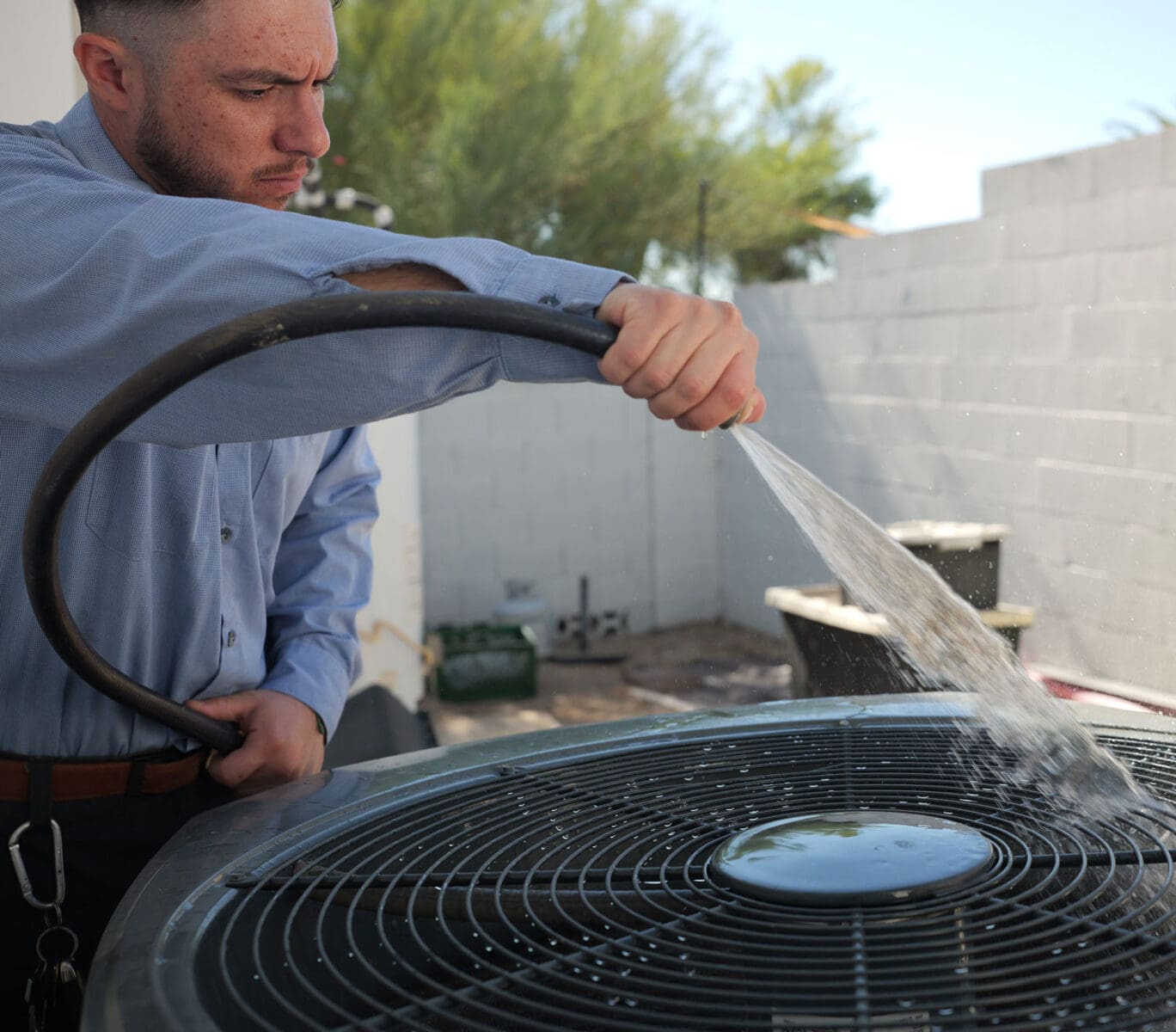
Quick checks before placing a service call
- Verify the thermostat is on Cool with the correct setpoint.
- Check the filter; a packed filter raises static and starves the coil.
- Inspect the outdoor unit for blocked airflow from leaves or debris.
- Look for water around the air handler that could signal a clogged drain.
- Listen for rapid on-off cycles that indicate an electrical control issue.
Cost and Payback in Phoenix Terms
Upfront cost for a variable speed system runs higher than a single-stage or a basic two-stage unit. The spread depends on tonnage, rooftop vs. Split, and duct improvements. In Phoenix, cooling season length and high afternoon loads shrink payback time. Homes with significant runtime, such as those in South Mountain and Sunnyslope, often see a three to six year window for bill savings to cover the premium. Add comfort gains, cleaner air, and quieter operation, and the value case strengthens.
A site visit sets the real numbers. If returns need upgrades or if a rooftop curb needs correction, the quote will reflect that work. Cutting corners in this climate undercuts the reason to buy a variable speed unit. The right design lets the equipment show what it can do on a 114°F day.
Why Local Knowledge Matters in the Valley
Phoenix is not a generic cooling market. Heat load profiles vary by neighborhood. Arcadia homes have mature trees that reduce afternoon sun but often carry older ducts. Biltmore properties may have complex layouts with zoned systems. Desert Ridge and North Phoenix see large roof areas with high exposure and many rooftop units. Ahwatukee Foothills homes face mountain-driven winds and dust that clog condensers. Maryvale block homes hold heat well into the night. A contractor who works daily across these areas knows the patterns and sets variable speed systems to match them.
Day & Night fields calls from Phoenix zip codes 85001, 85016, 85018, 85021, 85032, 85044, 85048, 85050, and 85085, and supports nearby cities including Scottsdale, Tempe, Mesa, Chandler, Glendale, Peoria, Gilbert, and Paradise Valley. The team knows how to work around Phoenix Sky Harbor flight paths, HOA guidelines near Papago Park, and rooftop access rules for commercial buildings near Chase Field.
Troubleshooting Examples From Recent Phoenix Calls
A homeowner in 85032 reported frequent compressor lockouts at 5 p.m. On a two-year-old inverter unit. Testing showed a failing contactor with heat damage and a weak start capacitor. The Day & Night technician replaced both from truck stock and added a surge protector at the condenser. Lockouts cleared, and the unit held target capacity through the evening.
In 85018 near the Arizona Biltmore, a variable speed system blew warm air after a monsoon. The evaporator coil was iced, and copper refrigerant lines were frosted. Static was high due to a clogged filter and a collapsed return flex. After replacing the return section and resetting airflow target CFM, the coil thawed, and supply air stabilized. An R-410A leak check returned normal.
On a Paradise Valley Village rooftop, a package unit showed squealing from the blower motor. Bearings were failing. The blower motor was replaced, the belt aligned, and the ECM controller recalibrated for correct RPM at each compressor step. The system ran quiet, and airflow balanced across the supply trunks.
Common Questions About Variable Speed in Phoenix
Does variable speed help during monsoon humidity spikes? Yes. Slower blower speeds increase moisture removal. That helps homes near Papago Park and South Mountain handle sticky evenings without overcooling.
Can a variable speed unit work with existing ducts? Often, yes. But ducts must support target CFM at acceptable static. Many Phoenix homes need return upgrades. A pressure reading during the visit answers this question fast.
Is rooftop installation a problem for electronics? Phoenix heat is hard on all equipment. Variable speed systems include protections, but surge protection and shade for control boxes help. Many rooftops run for years with clean power and routine service.
What about brand choice? Trane, Carrier, Lennox, Goodman, Rheem, York, Bryant, Daikin, Mitsubishi Electric, and American Standard all offer strong variable speed options. The best match depends on footprint, controls, and service access.
What maintenance is different? Coils still need cleaning. Filters still matter. Technicians also check inverter board status, firmware updates, and blower profiles. The maintenance visit is more about tuning than only cleaning.
Signals You Might Need Repair Before an Upgrade
Some systems can run a few more seasons with a focused repair. If an air conditioner is blowing warm air due to a failed start capacitor or a contactor, that is a quick fix. If refrigerant leaks are present at a corroded flare or a rubbed copper line, repair can restore cooling. If a compressor is burned out or evaporator coil is rotted, replacement makes more sense. Either way, a fast diagnosis keeps Phoenix homes safe during heat waves.
Top symptoms that call for immediate service
- Short cycling during the hottest hours of the day
- Ice buildup on copper refrigerant lines or the evaporator coil
- Unusually high energy bills without a thermostat change
- Squealing or grinding from the blower motor
- Thermostat malfunctions or frequent system resets
Day & Night offers 24/7 emergency AC service with same-day repairs across Phoenix and Maricopa County. Trucks carry heavy-duty start capacitors, universal contactors, and common relay switches to solve the most frequent failures on the first visit.
Why Day & Night Is a Safe Bet During a Phoenix Heat Wave
Technical standards matter. Day & Night deploys NATE-certified technicians who work on residential and commercial systems daily. The company is licensed, bonded, and insured under ROC #133378 and holds a BBB A+ rating. On repair calls, Day & Night quotes a fixed price before the work. On replacement, a written proposal lays out equipment, ducts, and controls with clear numbers. Homeowners know what will be done and why.
Brand support spans Trane, Carrier, Lennox, Goodman, Rheem, York, Bryant, Daikin, Mitsubishi Electric, and American Standard. Warranty service follows factory procedures that protect coverage. For homes in Arcadia, Biltmore, Paradise Valley Village, Desert Ridge, Ahwatukee Foothills, North Mountain, Maryvale, and South Mountain, dispatch routes are tuned for fast arrival during peak demand.
Ready for Steadier Comfort and Lower Bills?
A variable speed AC unit matches Phoenix heat with calm, steady performance. It cools rooms evenly, filters more air, and trims energy use during peak hours. In a city where reliable air conditioning is a life-safety necessity, that mix matters. If the system at home short cycles, blows warm air, or struggles after 3 p.m., it is time to talk with a local expert who understands Phoenix load patterns and rooftop realities.
Day & Night Air Conditioning, Heating, & Plumbing provides:
— 24/7 emergency air conditioning repair across Phoenix, AZ and the wider Maricopa County corridor
— NATE-certified diagnostics for central air conditioners, heat pumps, ductless mini-splits, split systems, rooftop units, and package units
— Trucks stocked with heavy-duty start capacitors and universal contactors for first-visit fixes
— A fixed-price guarantee so homeowners know the total before work starts
Ask about the $50 off AC repair coupon. It applies to most residential service calls inside Phoenix city limits and nearby cities like Scottsdale, Tempe, Mesa, Chandler, Glendale, Peoria, Gilbert, and Paradise Valley.
Schedule a variable speed consultation or an emergency repair now. A dispatcher will route the nearest professional to the address, whether it sits near the Heard Museum, the Arizona State Capitol, Chase Field, or the quiet blocks off North Mountain. Variable speed comfort starts with a load calculation and a pressure reading. The rest follows from solid engineering and local experience.
Day & Night Air Conditioning, Heating & Plumbing 3669 E La Salle St,
Phoenix, AZ 85040 (602) 584-7758 www.dayandnightair.com AZ Licenses: ROC335883 | ROC335884 Google Maps | Facebook | Instagram | LinkedIn